Alina Okun
Most professional bios list credentials and achievements. This is something different. This is the actual journey, told the way I would tell it if you asked how I got here.
Season 01
The Practical Path
I came to the United States as a child from Eastern Europe, and that shaped almost every decision I made early on in my career. When you're an immigrant, you think about security differently. You pick what's stable. You pick what will keep you independent.
For college, Pace University made more sense than NYU. The Co-Op program meant I would graduate with real work experience. For my major, I picked accounting. Someone told me that no matter the economy, accountants are always needed. I became a CPA, which opened doors and gave me a credential that would prove useful for decades.
My first job was at Arthur Andersen, one of the largest accounting firms at the time. Within six months, I knew public accounting wasn't for me. I stayed almost two years anyway, until Enron ended the company.
After that, I landed at Simon & Schuster. To this day, it remains my favorite job. Meeting authors and reading early releases was genuinely fun.
Simon & Schuster Australia, 2001
Season 02
The Constraint Years
Then I had children, and everything changed.
It was the first time I started to make career decisions based on what would work for me as a mother. No travel. Predictable hours. Flexibility for daycare and doctors' appointments.
Before I had kids, it never occurred to me that I would have to choose between them and my career. I believed that in the 21st century, women had moved past that tradeoff. I was wrong. The social infrastructure in the U.S. doesn't support it, and my career had to wait.
I had my first child at 25. A few years later, it felt like my career was over before it began. Looking back now, I can see that season was actually short. Children are little for only a few years. At the time, though, it felt permanent.
Season 03
The First Exit
About ten years into my corporate career, I knew things weren't right. I tried working with a life coach, but it didn't help. I needed to actually make a change.
So, I bought a franchise. The pitch was appealing: in business for yourself, not by yourself. I looked for one that would let me use my professional background, because I didn't want to throw away a decade of experience.
The training turned out to be the most valuable part. When you own a franchise, your job is primarily sales and marketing. After two business degrees and ten years in finance, I had never been taught either. That experience taught me more about running a business than any classroom. I call it my real-life MBA.
The franchise led to an unexpected job that took me to new countries and showed me how business works in different cultures. Even though I had no intentions of coming back to the corporate world, I stayed at that company longer than anywhere I had worked before.
Season 04
The Breaking Point
Eventually, even the work I loved became something I dreaded.
The newness wore off. What remained was repetitive and uninspiring. I found myself thinking that no human being should be doing what I was doing. These tasks were meant for machines. Instead, I was becoming the machine.
In my last years there, desperate for intellectual oxygen, I enrolled in a doctoral program in Strategy and Innovation. I was working 60+ hours a week, spending another 20+ hours on coursework and my dissertation, commuting 12 hours a week, and raising two kids.
One evening, sitting alone in my NYC office at 10 pm, I had a premonition. I had to leave this job or something terrible would happen to me. My body knew what my mind wasn't ready to accept.
Three months later, I quit. No job lined up. No clear plan. Just vague ideas about finishing my doctorate, maybe consulting, possibly writing a book. Mostly, I needed to feel like myself again.
Season 05
The Search
It took almost two years for the fog to lift.
I defended my dissertation in September 2019 and earned my doctorate. I expected to feel relief. Instead, I felt empty. I had pushed myself so hard for so long that there was nothing left.
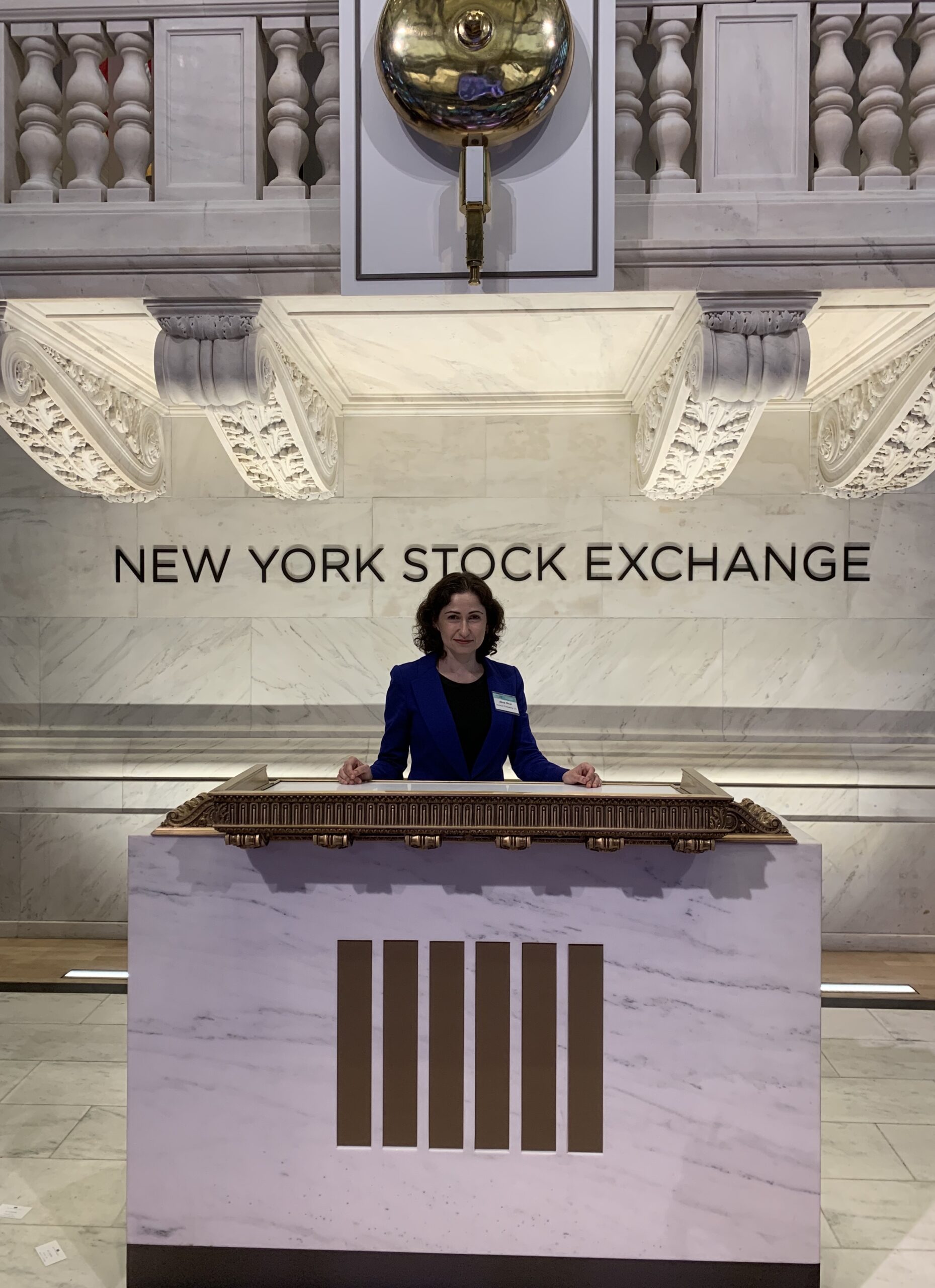
New York Stock Exchange, 2019
What followed was years of searching. I wanted to understand why traditional career advice had failed me and whether it was failing others too. I read dozens of books on work, careers, labor economics, and professional development. I analyzed over fifty major workforce reports. I wrote hundreds of blog posts and newsletter publications, trying to make sense of what I was learning.
I tried many things during this period. A CFO role at a tech startup that pulled me into the world of venture capital. Angel investing in seven companies. Building my own startup, which I abandoned the moment I launched it. Joining three different DAOs to experience new forms of organization. Taking over a hundred courses to test different business models. Partnering with someone for two years to build a company focused on career exploration.
I co-authored two books. One became a USA Today bestseller. I conducted dozens of interviews with executives and researchers focused on the future of work. I had research published in an academic journal. I was invited to join the Harvard Business Review Advisory Council.
Every experiment taught me something. Every failure narrowed the field. Slowly, a picture emerged. The career frameworks most people inherit were designed for an economy that no longer exists. The three-stage model of education, work, and retirement made sense when industries were stable, and people stayed at one company for decades. That world is gone, but the advice remains.
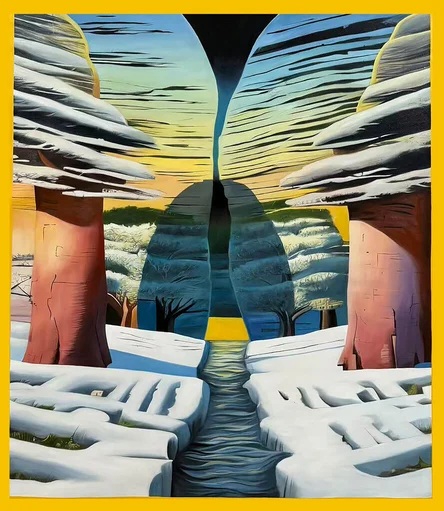
I became serious about art during that time. Collecting it, writing about it, finding parallels between emerging art and the changing nature of work. Both are rooted in tradition while navigating toward something new.
Out of all that reading, experimenting, and failing, I developed my own understanding of how professional life actually works now.
What I've Come to Understand
Our lives move through seasons. What fits in one season doesn't fit in the next, and that's not a failure.
You are not your job. You are a person with capabilities, and a job is just one arrangement for using them.
There is no right answer waiting to be discovered, only tradeoffs to evaluate.
Small experiments reveal more than elaborate plans.
When something stops working, you take what you learned and build again.
Where you work and who you work with can matter more than the work itself.
This framework became the foundation for Choices, a decision-making curriculum I built for universities. Learn more at ciainsights.com